
Hearing the words "prostate surgery" can feel overwhelming for many patients and families. Questions about pain, recovery, bladder control, and long-term quality of life often start racing through the mind immediately.
And when doctors mention robotic surgery, another question quickly follows: "Will a robot actually perform the surgery?"
The answer is no.
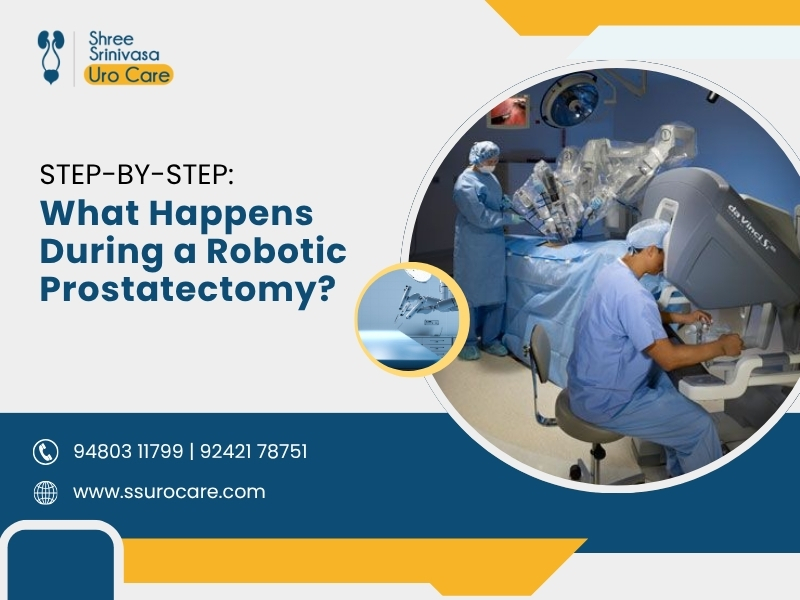
During robotic prostatectomy, the surgery is still completely controlled by a highly trained surgeon. The robotic system simply helps improve precision, control, and visualization during the procedure.
At SS Urocare, Dr. K. Shiva Kumar carefully guides patients through every step of robotic prostatectomy in Bangalore, so they understand what to expect before surgery, during recovery, and afterward.
If you or a loved one has been advised robotic surgery, understanding the process step-by-step can help reduce fear and make decision-making easier.
What Is a Robotic Prostatectomy?
It is a modern surgical procedure used to remove the prostate gland, most commonly for prostate cancer treatment.
In robotic prostatectomy, surgeons use advanced robotic instruments that allow more precise movement compared to traditional open surgery.
The procedure is often referred to as:
- robot assisted prostatectomy
- robotic prostate removal
- minimally invasive prostatectomy
These techniques are designed to help surgeons operate through smaller incisions while improving visibility and precision.
Why Is Robotic Surgery Recommended?
Doctors may recommend prostate cancer robotic surgery when cancer is limited to the prostate gland, and surgery is considered an appropriate treatment option.
Compared to traditional open procedures, robotic techniques may offer benefits such as:
- smaller incisions
- reduced blood loss
- shorter hospital stay
- faster recovery
- improved surgical precision
For many patients considering robotic prostatectomy, preserving quality of life after surgery becomes one of the biggest priorities.
That includes concerns about:
- urinary incontinence
- erectile dysfunction
- recovery speed
- bladder control
- long-term cancer management
Step 1: Pre-Surgical Evaluation
Before surgery, patients undergo a detailed medical evaluation.
This may include:
- blood tests
- imaging scans
- biopsy review
- heart fitness assessment
- urine testing
The doctor also evaluates:
- cancer stage
- overall health
- age
- difficulty in urinating
- previous surgeries
During this stage, patients often discuss concerns about:
- difficulty in urinating
- recovery time
- sexual health
- possible bladder control problems
At SS Urocare, Dr. K. Shiva Kumar explains the expected outcomes and possible risks carefully before proceeding with robotic prostatectomy in Bangalore.
Step 2: Preparing for Surgery
Before the procedure:
- Fasting instructions are given
- Medications may be adjusted
- Bowel preparation may sometimes be advised
- Anesthesia evaluation is completed
Patients are admitted to the hospital on the day of surgery or sometimes the previous evening, depending on the treatment plan.
Because minimally invasive prostatectomy uses smaller incisions, preparation is usually simpler compared to large open surgical procedures.
Step 3: Anesthesia and Positioning
The surgery is performed under general anesthesia, meaning the patient remains asleep and pain-free during the operation.
Once anesthesia is given:
- The patient is positioned carefully
- The abdomen is cleaned and prepared
- Small incisions are made
These small openings allow insertion of robotic instruments and a high-definition camera used during robot assisted prostatectomy.
Step 4: The Robotic Surgical System
One of the biggest misconceptions is that the robot performs surgery independently.
In reality, the surgeon remains fully in control throughout the procedure.
During prostatectomy surgical technique, the surgeon sits at a console and controls robotic arms with highly precise hand movements.
The robotic system offers:
- magnified 3D vision
- improved precision
- steadier movement
- better access to delicate structures
This precision becomes especially important while working around nerves and tissues linked to:
- bladder control
- urinary function
- sexual function
Step 5: Prostate Gland Removal
The primary goal of surgery is safe prostate gland removal while preserving surrounding healthy structures whenever possible.
During robotic prostate removal, the surgeon carefully separates:
- the prostate gland
- surrounding tissues
- blood vessels
- nerves
The cancerous prostate tissue is then removed through one of the small incisions.
A major focus during prostate cancer robotic surgery is minimizing the risk of incomplete tumor removal while protecting nearby structures as safely as possible.
Step 6: Reconnecting the Urinary Tract
After the prostate is removed, the bladder is carefully reconnected to the urethra.
This step is extremely important because it directly affects healing and urinary function after surgery.
A urinary catheter is temporarily placed to help urine drain while the connection heals properly.
Patients often worry about:
- urinary incontinence
- urine leakage
- long-term bladder function
While temporary leakage may occur during recovery, many patients gradually improve with healing and pelvic floor exercises.
Step 7: Recovery After Surgery
Recovery after robotic prostatectomy in Bangalore at SS Urocare is generally faster compared to traditional open surgery because of the minimally invasive approach.
Most patients may:
- walk within a day
- resume light activities gradually
- leave the hospital within a shorter period
However, recovery still requires patience and proper follow-up care.
Some temporary symptoms during healing may include:
- mild discomfort
- fatigue
- urine leakage
- temporary bladder control problems
Doctors usually guide patients regarding:
- catheter care
- walking
- diet
- hydration
- activity restrictions
Understanding Urinary Control After Surgery
One of the biggest emotional concerns after prostate surgery is bladder control.
Some patients experience temporary urinary incontinence after surgery because muscles and tissues need time to heal and adjust.
This may include:
- leaking while coughing
- leakage during movement
- urgency to urinate
Pelvic floor exercises often play an important role in improving bladder control over time.
Most patients notice gradual improvement during recovery, although timelines vary individually.
What About Erectile Function?
Another common concern after robot assisted prostatectomy is erectile dysfunction.
The nerves controlling erections are located very close to the prostate gland, which is why preserving them safely becomes important during surgery whenever medically possible.
Recovery depends on factors like:
- age
- pre-surgery function
- cancer extent
- nerve preservation
- overall health
Doctors discuss realistic expectations carefully before surgery because recovery differs from patient to patient.
Why Robotic Techniques Matter?
Modern advanced prostatectomy surgical technique approaches aim to improve:
- precision
- incomplete tumor removal
- recovery
- functional outcomes
This is one reason many patients now explore robotic prostatectomy in Bangalore at SS instead of traditional open procedures.
The robotic system helps surgeons perform delicate movements in confined spaces with better visibility and control.
When Is Robotic Surgery Not Suitable?
Not every patient may be the ideal candidate for robotic surgery.
Suitability depends on:
- cancer stage
- previous surgeries
- obesity
- medical conditions
- overall surgical fitness
The decision is always individualized after a detailed evaluation.
At SS Urocare, Dr. K. Shiva Kumar carefully evaluates whether minimally invasive prostatectomy is appropriate for each patient's condition.
The Lesser-Known Part Of the Journey
Cancer treatment affects more than just the body.
Many patients experience:
- fear
- anxiety
- stress
- uncertainty about recovery
Open communication with the medical team often helps patients feel more prepared and supported throughout treatment.
Understanding the process step-by-step can reduce unnecessary fear and improve confidence before surgery.
Common Advantages of Robotic Prostatectomy
Many patients choose robotic prostate removal because robotic techniques may help with:
- smaller scars
- shorter hospital stay
- reduced blood loss
- faster mobility
- improved surgical precision
However, successful outcomes still depend heavily on:
- cancer stage
- patient health
- recovery care
Follow-Up After Surgery
Even after successful surgery, follow-up care remains important.
Patients usually require:
- PSA monitoring
- regular consultations
- recovery assessment
- urinary function evaluation
This helps doctors monitor healing and ensure there are no signs of cancer recurrence after prostate surgery.
FAQs
Q1. How much does a robotic prostatectomy usually cost in Bangalore?
The cost of robotic prostatectomy in Bangalore generally ranges between ₹2,50,000 and ₹5,00,000, depending on the cancer stage and overall treatment complexity. Additional expenses may include diagnostic tests, hospital stay, medications, and post-operative care. Some hospitals may also offer EMI or insurance support options.
Q2. What is the life expectancy after prostate removal?
For many patients with early-stage prostate cancer, long-term survival after surgery is highly favorable. Many men continue to live healthy lives for 10 to 20 years or more after treatment, especially when cancer is detected and treated early. Overall health, cancer stage, and recovery progress all influence long-term outcomes.
Q3. Is robotic prostatectomy considered a major surgery?
Yes, it is still considered a major surgery because it involves the removal of the prostate gland under general anesthesia. However, it is performed using minimally invasive techniques with smaller incisions compared to traditional open surgery, which may help improve recovery and reduce hospital stay.
Q4. How long does recovery usually take after robotic prostate surgery?
Initial recovery usually takes around 4 to 6 weeks for most daily activities, although complete healing may continue for several months. Many patients are able to walk within a day or two after surgery, while urinary control and sexual function may gradually improve over time with proper recovery care and follow-up.
Q5. Will I need a catheter after surgery?
Yes, a urinary catheter is usually placed temporarily after surgery to help the urinary connection heal properly.
Q6. Can urinary leakage improve after surgery?
In many patients, bladder control gradually improves with healing and pelvic floor exercises, although recovery time varies individually.
Clear Information For An Informed Decision
Knowing that you may need surgery can naturally feel stressful and uncertain. But modern robotic techniques are making treatment more precise, recovery smoother, and outcomes more reassuring for many patients today.
Understanding the procedure step-by-step often makes the journey feel less intimidating and more manageable.
At SS Urocare, Dr. K. Shiva Kumar focuses on patient-centered care, detailed guidance, and evidence-based treatment planning for robotic prostatectomy in Bangalore to help patients navigate prostate surgery with greater confidence and clarity.