

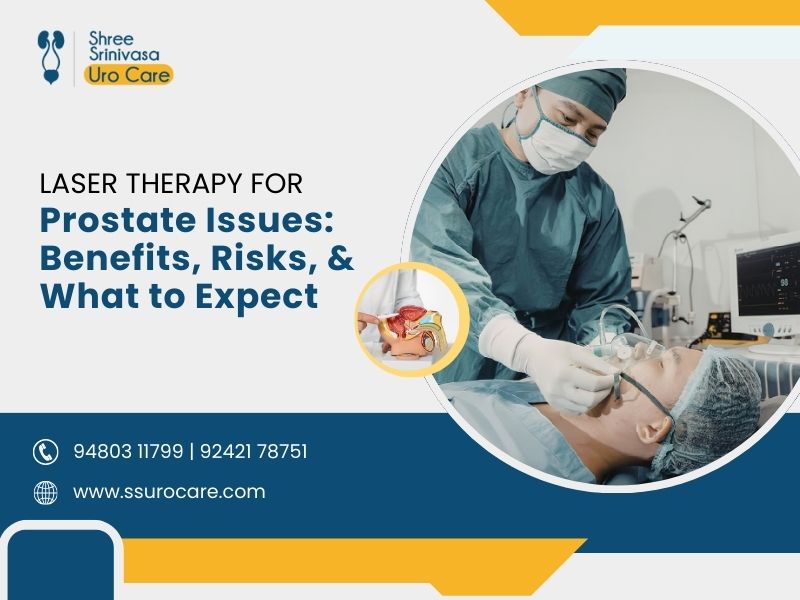
A quiet change in routine often marks the beginning. A man who once slept through the night suddenly wakes two or three times to use the bathroom. Long drives feel uncomfortable because frequent restroom stops interrupt the journey. Even meetings or movies start to feel distracting when the sudden urge to urinate appears unexpectedly.
Many men initially dismiss these changes as part of normal aging. However, when these symptoms continue for weeks or months, they often signal an underlying prostate issue. At that stage, patients begin exploring medical options that provide effective relief without significantly disrupting daily life.
Modern urology offers advanced procedures designed for precision and faster recovery. Options like prostate laser surgery in Bangalore SS Urocare provide a minimally invasive approach for treating prostate enlargement. Laser therapy removes excess tissue carefully, improves urinary flow, and protects surrounding structures while supporting smoother recovery.
Understanding the Prostate and Its Role in Urinary Health
The prostate sits just below the bladder and surrounds the urethra. This gland contributes to the production of seminal fluid and plays an important role in male reproductive health.
As men age, the prostate often increases in size. Doctors call this condition benign prostatic hyperplasia (BPH). Although BPH does not represent cancer, it can significantly affect urinary function.
When the prostate enlarges, it narrows the urethral passage. This narrowing creates resistance during urination, which leads to several noticeable symptoms.
Common symptoms include:
- Frequent urination, especially at night
- Weak or interrupted urine stream
- Difficulty starting urination
- A sensation that the bladder never fully empties
- Sudden urgency to urinate
These symptoms can gradually affect sleep quality, daily productivity, and overall comfort.
Urologists at SS Urocare often evaluate these concerns carefully because early treatment may prevent complications such as bladder damage or recurrent infections.
When Do Doctors Consider Prostate Laser Surgery?
Doctors often begin treatment for prostate enlargement with medications and lifestyle adjustments. However, when symptoms persist or worsen, they may recommend procedural treatment.
One advanced option includes prostate laser surgery, which removes the obstructing prostate tissue using focused laser energy.
Laser technology allows surgeons to address the problem with high precision while minimizing trauma to surrounding tissues.
Urologists may recommend this treatment when patients experience:
- Severe urinary obstruction
- Recurrent urinary tract infections
- Bladder stones related to prostate enlargement
- Poor response to medications
- Difficulty emptying the bladder completely
At SS Urocare, specialists assess each patient's symptoms, medical history, and diagnostic results before recommending laser therapy.
How Laser Therapy for Prostate Conditions Works?
Laser prostate procedures use concentrated light energy to remove excess prostate tissue that blocks urine flow.
The surgeon inserts a thin instrument through the urethra. This instrument contains a laser fiber that delivers controlled energy to the enlarged tissue.
Two commonly used laser techniques include:
Laser Vaporization
The laser converts excess prostate tissue into vapor. This process widens the urinary channel and improves urine flow.
Laser Enucleation
The laser separates and removes larger sections of prostate tissue. Surgeons may remove these pieces through the bladder during the procedure.
Both methods focus on restoring normal urinary function while protecting surrounding structures.
The precision of laser technology allows surgeons to control bleeding more effectively compared with traditional surgical approaches.
Key Benefits of Laser Therapy for Prostate Enlargement
Many patients explore laser therapy because it offers several advantages over conventional prostate surgery.
Some important benefits include:
Minimal Bleeding
Laser energy seals blood vessels while removing tissue. This feature reduces blood loss during the procedure.
Faster Recovery
Patients often resume normal activities sooner because the procedure causes less disruption to surrounding tissues.
Shorter Hospital Stay
Many laser procedures allow discharge within 24 hours, depending on the patient's health condition.
Suitable for Certain High-Risk Patients
Patients who take blood-thinning medications may still qualify for laser procedures under careful supervision.
Improved Urinary Function
Removing the obstructing tissue allows urine to pass more easily through the urethra.
These advantages make prostate laser surgery an important option for patients seeking effective and minimally invasive treatment.
Preparing for Laser Prostate Treatment
Before recommending laser therapy, doctors perform several diagnostic evaluations. These tests help determine the size of the prostate and the severity of urinary obstruction.
Common evaluations include:
- Digital rectal examination
- Urine analysis
- Blood tests, including PSA levels
- Ultrasound imaging
- Uroflowmetry to measure urine flow rate
These assessments provide valuable information about prostate function and bladder health.
Doctors also review medications, allergies, and existing medical conditions before scheduling the procedure.
Patients receive detailed instructions regarding diet, medication adjustments, and pre-surgery preparation.
What Patients Can Expect During the Procedure?
Laser prostate procedures typically occur under spinal or general anesthesia.
The surgeon inserts a specialized instrument through the urethra without making external incisions. The laser then targets the enlarged prostate tissue that blocks the urinary pathway.
Most procedures last between 60 and 120 minutes, depending on prostate size and the surgical technique used.
After the procedure:
- Doctors usually place a temporary catheter to drain urine
- Patients remain under observation for a short recovery period
- Many patients return home the following day
The minimally invasive nature of laser therapy helps reduce postoperative discomfort and speeds recovery.
Recovery and Long-Term Outlook
Most patients notice a gradual improvement in urinary symptoms within weeks after surgery.
During the recovery period, doctors often recommend:
- Drinking adequate fluids
- Avoiding heavy lifting for several weeks
- Limiting caffeine and alcohol temporarily
- Attending scheduled follow-up visits
The bladder often requires time to adapt after prolonged obstruction. Many patients report steady improvement in urinary flow and comfort over time.
Long-term outcomes depend on individual health conditions, prostate size, and adherence to medical advice.
Frequently Asked Questions
- Who is a suitable candidate for prostate laser surgery?
Doctors usually recommend laser therapy for men with moderate to severe urinary symptoms caused by prostate enlargement. Patients who do not respond well to medications may benefit from this procedure. Dr. Shivakumar evaluates prostate size, bladder function, and overall health before suggesting prostate laser surgery in Bangalore at SSUro Care. This evaluation ensures that the procedure offers the safest and most effective outcome.
- Is prostate laser surgery a safe procedure?
Laser prostate surgery generally offers a high level of safety when trained specialists perform it in a well-equipped medical facility. The technique allows surgeons to remove tissue with precision while minimizing bleeding. Many patients recover faster compared with traditional prostate surgery. Doctors still monitor patients closely during recovery to manage any temporary side effects. Regular follow-up helps ensure optimal healing and urinary function.
- Will urinary symptoms improve immediately after laser surgery?
Many patients notice improvement in urine flow soon after the procedure. However, the bladder may require time to adjust after years of obstruction. Some individuals experience temporary urinary urgency during early recovery. Symptoms typically improve gradually over several weeks. Doctors continue monitoring progress during follow-up appointments.
Moving Toward Effective Prostate Care
Prostate enlargement often develops slowly, yet its effects on daily life can become significant over time. Interrupted sleep, frequent restroom visits, and reduced urinary flow can affect comfort, confidence, and productivity.
Advances in medical technology now provide treatment options that prioritize precision, safety, and faster recovery.
Men who experience persistent urinary symptoms may benefit from discussing prostate laser surgery in Bangalore SS Urocare with a qualified urologist. A detailed evaluation can help determine whether laser therapy offers the right solution.
Sometimes, the most important step toward better health begins with understanding the options available and choosing a path guided by expert care.